
Understanding Trauma Therapy and Finding the Right Fit

The Trauma Therapy and Addiction Connection in Practice
Why 75% of Your Clients Have Trauma Histories
A simple prevalence assessment can help clinicians and program leads quickly estimate trauma exposure rates in their client population. When implementing trauma therapy, understanding this baseline is critical for resource allocation and program design. At Coastal Recovery Partners in South Portland, Maine, our dual diagnosis treatment programs routinely integrate these assessments to ensure comprehensive care.1
Quick Trauma Prevalence Checklist
- Review intake data for documented trauma exposure (childhood, interpersonal, disaster, combat, etc.).
- Count clients with any trauma history noted—aim for a 3-month rolling window.
- Compare your findings to national benchmarks: 75–80% of individuals seeking substance use treatment report at least one significant trauma history.
This high prevalence is not a statistical fluke. Decades of research have confirmed a strong link between trauma exposure—whether acute or repeated—and the development of substance use disorders. In opioid use disorder programs, for example, trauma rates have been documented as high as 83%.4
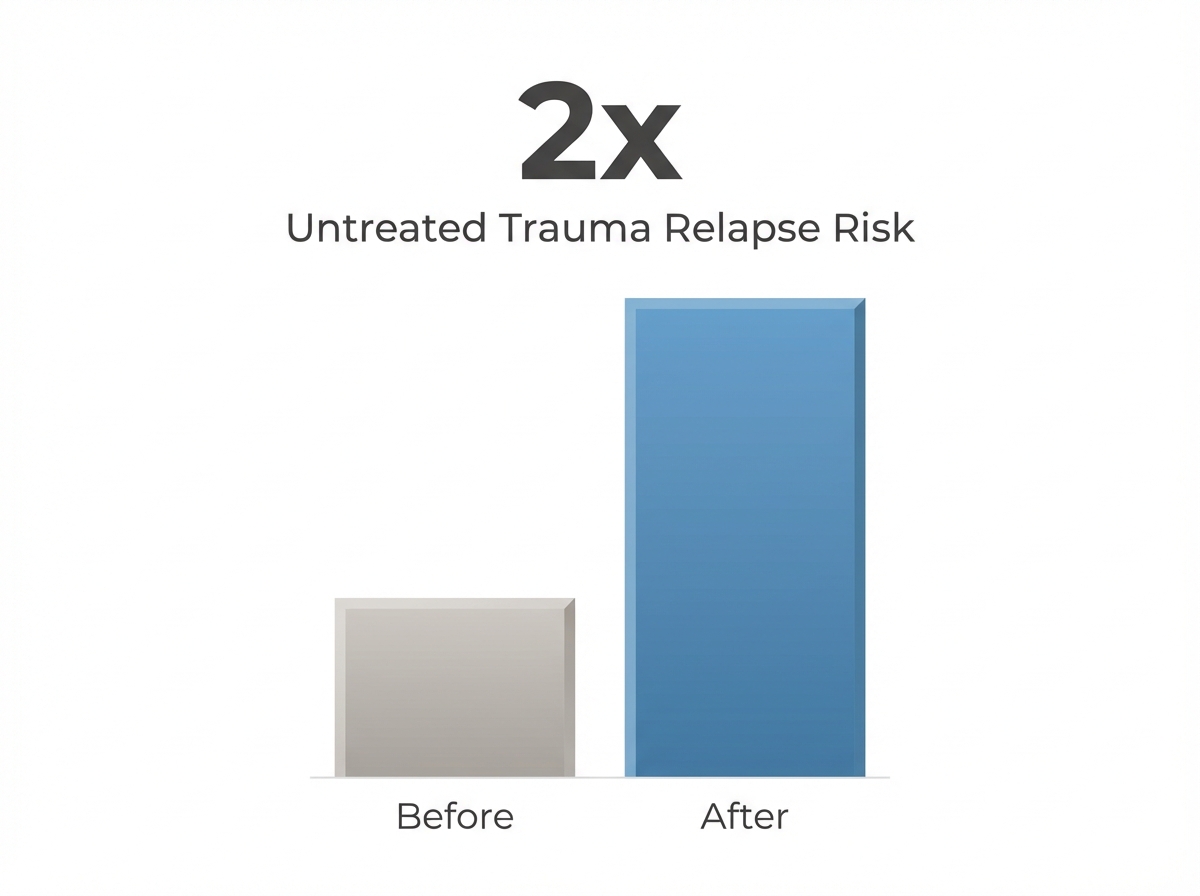
Trauma therapy is not an optional add-on; it addresses core drivers of addictive behaviors. Untreated trauma doubles a client’s risk of relapse in the first six months after substance use treatment. This approach is ideal for organizations focused on sustained recovery outcomes and minimizing readmission rates.4
Clinicians working with trauma survivors in recovery are uniquely positioned to recognize that trauma is the rule, not the exception, in addiction treatment. Routine trauma screening and integrated treatment planning can help ensure that these histories are addressed safely and effectively.
Next, it’s essential to distinguish between complex trauma and single-incident PTSD to tailor interventions appropriately.
Complex Trauma vs. Single-Incident PTSD
Differentiation Tool: Trauma Profile Snapshot
- Did the trauma occur as a single, identifiable event or repeatedly over time?
- Are symptoms limited to intrusive memories and avoidance, or do they include identity disturbance, relational difficulties, and emotional dysregulation?
- Has the client reported chronic feelings of shame, hopelessness, or persistent distrust of others?
Understanding the difference between complex trauma and single-incident posttraumatic stress disorder (PTSD) is foundational for effective trauma therapy. Single-incident PTSD typically results from one discrete event—such as an accident, assault, or natural disaster—and is often marked by re-experiencing, avoidance, and hyperarousal. In contrast, complex trauma, sometimes referred to as complex PTSD (C-PTSD), stems from prolonged or repeated traumatic exposure, often in interpersonal or developmental contexts. Its hallmark features include difficulties with self-identity, affect regulation, and maintaining healthy relationships.9
For professionals working in addiction treatment, this distinction shapes both assessment and intervention. While single-incident PTSD may respond well to standard evidence-based treatments like Cognitive Processing Therapy or Prolonged Exposure, complex trauma presentations often require modified protocols that incorporate skills for emotion regulation and relational repair. This method works when clients struggle with chronic distrust, attachment disruptions, or emotional instability.9
Research suggests that up to 70% of individuals with substance use disorders present with complex trauma, underscoring the need for specialized frameworks and flexible treatment pacing. These nuances make accurate trauma profiling essential for tailoring care and maximizing recovery potential.9
With these distinctions in mind, the next section explores how to match specific trauma therapy modalities to individual client needs and symptom profiles.
Evidence-Based Trauma Therapy Modalities: Matching Method to Need
Cognitive Processing and Exposure Approaches
Modality Selection Checklist: Cognitive Processing and Exposure Approaches
Cognitive Processing Therapy (CPT) and Prolonged Exposure (PE) are two gold-standard trauma therapy modalities with robust evidence supporting their use for posttraumatic stress disorder (PTSD), especially when trauma stems from a single event. CPT focuses on helping clients identify and reframe unhelpful trauma-related beliefs, which can drive both PTSD and substance use patterns. PE involves gradual, controlled exposure to trauma memories and triggers, aiming to reduce avoidance and fear responses over time. Both approaches demonstrate 40–65% remission rates for PTSD symptoms, and have shown effectiveness within addiction treatment settings when integrated by competent providers.6,7
This strategy suits organizations that serve clients presenting with clear, time-bound traumatic incidents and who have achieved initial stabilization in their recovery journey. For example, a working adult with a single-incident accident trauma and stable opioid use disorder may benefit from CPT, while another client with a history of sexual assault and strong avoidance patterns might respond well to PE. Treatment typically spans 12–16 weekly sessions, requiring a time investment of 60-90 minutes per session, and costing between $150 to $250 per hour depending on insurance and location.6,7
This path makes sense for trauma survivors in recovery who exhibit readiness for direct trauma processing and have reliable support systems in place. Next, the discussion shifts to modalities addressing somatic symptoms and nonverbal trauma memories.
EMDR and Somatic Interventions
Modality Matching Tool: EMDR and Somatic Intervention Indicators
- Does the client experience intense body-based symptoms or dissociation during trauma recall?
- Are trauma memories fragmented, nonverbal, or difficult to articulate?
- Has talk therapy alone yielded limited progress on core symptoms?
- Is there a need for gentle pacing due to complex trauma or high reactivity?
Eye Movement Desensitization and Reprocessing (EMDR) and somatic interventions offer distinct pathways for addressing trauma that is stored in the body or expressed through nonverbal symptoms. EMDR uses bilateral stimulation (such as eye movements) to help clients reprocess traumatic memories, often resulting in rapid symptom relief—meta-analyses show effect sizes comparable to gold-standard treatments, with some clients reporting faster improvement in the first few sessions. This solution fits trauma survivors in recovery who have difficulty accessing trauma details verbally or who become overwhelmed by traditional talk therapies.5
Somatic interventions—including body scanning, grounding exercises, and movement-based therapies—target dysregulation in the nervous system, aiming to restore a sense of safety and bodily control. Polyvagal-informed approaches, for instance, focus on calming the body’s stress response and have shown promise in reducing hyperarousal and cravings in substance use populations. Consider this route if clients display persistent physical symptoms (like chronic tension, GI distress, or heart racing) or struggle with emotional containment during trauma work.10
Opt for this framework when previous trauma therapy has plateaued or when clients exhibit high levels of dissociation, somatic distress, or fragmented trauma memories. These approaches require provider competency in managing strong physiological responses and are best delivered in settings equipped for trauma-informed care, such as the comprehensive outpatient programs offered at Coastal Recovery Partners.
The next section explores how to sequence these modalities within integrated trauma and addiction treatment plans.
Recovery Starts With a Conversation
Whether you’re exploring recovery for yourself or seeking guidance for someone you care about, Coastal Recovery Partners is here to help. Our team offers trauma-informed, evidence-based support grounded in structure, compassion, and real connection—without pressure or judgment.
When you’re ready, we’ll meet you where you are and help you take the next step forward.

"The challenge isn't whether to integrate, but how to calibrate intervention intensity against each client's window of tolerance—a clinical judgment that requires continuous recalibration as treatment progresses."
Integrated Treatment: Timing and Sequencing
The timing debate has largely settled among practitioners: integrated treatment addressing trauma and substance use concurrently demonstrates superior outcomes compared to sequential models. Yet implementation remains complex.
Stabilization timelines vary more than protocols suggest. While programs typically allocate initial weeks to safety-building and affect regulation, practitioners recognize that readiness markers matter more than calendar milestones. Some clients arrive with sufficient regulatory capacity from prior therapeutic work; others require extended stabilization despite clinical pressure to advance treatment phases. The tension between program structure and individualized pacing creates ongoing clinical dilemmas, particularly in time-limited outpatient models where insurance authorization cycles don't align with therapeutic readiness.
The integration question extends beyond whether to process specific memories. It involves determining how explicitly to name trauma's role in presenting symptoms, when to introduce psychoeducation about nervous system dysregulation, and how to balance validation of traumatic etiology against reinforcing avoidance patterns. Coastal Recovery Partners' approach embeds trauma recognition throughout their intensive outpatient and partial hospitalization programming without requiring premature disclosure—allowing clients to engage at their own pace while maintaining treatment momentum.
Clinical decision-making around trauma work sequencing involves assessing multiple factors simultaneously: current substance use patterns, dissociative tendencies, external safety and stability, therapeutic alliance strength, and the specific relationship between traumatic triggers and relapse risk. When intrusive memories directly precipitate use episodes, earlier intervention may be indicated despite incomplete stabilization. When trauma remains more diffuse in its impact, extended preparation often yields better engagement when formal processing eventually occurs.
Medication-assisted treatment introduces another variable into sequencing decisions. MAT's capacity to reduce hyperarousal and intrusive symptoms can accelerate readiness for trauma work, yet determining optimal timing for introducing both interventions simultaneously versus sequentially requires individualized assessment. Coastal Recovery Partners' coordinated MAT programming integrates medication management with therapeutic support, creating neurobiological stability that expands clients' capacity for deeper work while maintaining recovery focus.
The reality of outpatient treatment adds system-level complexity. Unlike residential settings with contained environments, outpatient models require practitioners to assess trauma work readiness while clients navigate ongoing external stressors, relationship dynamics, and environmental triggers. This demands sophisticated risk assessment and clear crisis protocols—balancing therapeutic progress against destabilization risks in less controlled settings.
Figure 1: Phased approach to integrated trauma and addiction treatment sequencing.
Clinical Decision Framework for Trauma Work
Assessing Readiness and Stabilization Needs
Readiness and Stabilization Assessment Tool
- Are current substance use symptoms (cravings, withdrawal, acute risks) under control?
- Has the client established a reliable routine, access to support, and basic safety?
- Are there unmanaged acute mental health symptoms (e.g., suicidality, psychosis) that might destabilize trauma work?
- Is the client able to tolerate distress and use coping skills during sessions?
Assessing readiness for trauma therapy starts with a clear-eyed evaluation of both substance use stability and the client's emotional safety. Evidence shows that integrated trauma and addiction treatment produces better outcomes, but attempting trauma processing before stabilization can heighten distress or even lead to relapse. This approach works best when trauma survivors in recovery have achieved a foundation of safety—meaning substance use is managed, acute psychiatric symptoms are addressed, and there is a basic support network in place.1
Consider this method if your clinical setting routinely serves individuals with fluctuating motivation or high relapse risk: the assessment tool above helps clarify when to prioritize skills-building, psychoeducation, and crisis planning over direct trauma exposure. For example, a client in early recovery experiencing daily cravings or housing instability may benefit from delay, while one with several months of sobriety, consistent therapy attendance, and good coping skills may be ready to engage.
Trauma therapy is most effective—and least likely to retraumatize—when readiness and stabilization are confirmed through structured, collaborative assessment. The next section addresses how provider competency and therapeutic alliance further shape safe and effective trauma work.
Provider Competency and Therapeutic Alliance
Provider Competency and Alliance Checklist
- Has the provider completed formal training in trauma therapy modalities (e.g., EMDR, CPT, TF-CBT)?
- Do they demonstrate understanding of trauma-addiction interplay and complex trauma adaptations?
- Are supervision and ongoing professional development in place for trauma-informed practice?
- Is there a track record of establishing trust and collaboration with trauma survivors in recovery?
Successful trauma therapy depends not just on selecting the right modality, but also on the provider’s competency and ability to build therapeutic alliance. Therapeutic alliance refers to the collaborative and trusting relationship between clinician and client—widely recognized as a key predictor of positive outcomes in trauma work. In fact, recent research shows that provider trauma competency and alliance quality can outweigh modality choice in determining both engagement and long-term recovery for individuals with substance use and trauma histories.9
Prioritize this when serving clients with histories of provider mistrust or complex trauma, where consistent, attuned care is essential to avoid re-traumatization. For example, a small addiction program may prioritize hiring clinicians who are dually credentialed in trauma-specific interventions and substance use treatment, while a larger agency might offer internal competency workshops and case consultation groups.
Next, the framework expands to system-wide practices that ensure trauma-responsive care across teams and settings.
Building Trauma-Responsive Treatment Systems
While individual treatment sequencing provides the clinical foundation for trauma-responsive care, sustainable implementation requires organizational commitment across every operational level. For professionals working within treatment systems—or advocating for institutional change—the challenge often lies not in understanding trauma's impact, but in navigating the practical barriers to embedding trauma sensitivity throughout an organization.
Staff turnover, inconsistent training depth, and the gap between administrative policies and frontline realities create friction points that undermine even well-intentioned protocols. For instance, using ICD-10 F43.10 for PTSD tracking is helpful, but training staff to use Ctrl + F to quickly locate safety plans in electronic health records during a crisis is equally vital.
Effective implementation begins with comprehensive staff development that extends beyond clinical teams to include intake coordinators, administrative staff, and facilities personnel—anyone whose interactions shape a client's experience of safety. The shift toward trauma-responsive assessment involves moving beyond symptom checklists to contextual inquiry that explores patterns, triggers, and adaptive responses without requiring disclosure of specific traumatic events. This approach recognizes that many individuals enter treatment unable or unwilling to discuss trauma history, yet still benefit from environments designed to minimize activation.
Physical spaces require deliberate attention: lighting that doesn't feel harsh or institutional, private areas for difficult conversations, and sensory considerations that support regulation rather than overwhelm.
Organizations like Coastal Recovery Partners demonstrate how trauma-responsive protocols can be operationalized across treatment modalities—their approach integrates specific safety protocols into intensive outpatient, partial hospitalization, and standard outpatient programming. This ensures that whether someone participates in cognitive behavioral therapy, dialectical behavioral therapy, or medication-assisted treatment, the underlying framework remains consistent. This continuity matters particularly during transitions between care levels, when inconsistent approaches can disrupt progress. By establishing clear implementation standards and accountability measures, treatment systems create environments where trauma awareness isn't an add-on but the foundation supporting all recovery work.
Conclusion
Integrating trauma-responsive principles into addiction treatment represents a fundamental evolution in clinical practice. As the field continues to recognize trauma's pervasive influence on substance use disorders, treatment systems that embed these principles throughout their programming demonstrate measurably improved engagement and outcomes.
This shift requires more than adding trauma-focused interventions—it demands systematic changes to assessment protocols, therapeutic environments, and the foundational assumptions underlying treatment design. The evidence base supporting trauma-informed addiction treatment continues to strengthen, yet implementation challenges persist across the field. Sustaining these approaches requires ongoing clinical training, organizational commitment to safety-focused environments, and program structures flexible enough to accommodate the varying paces of trauma processing alongside addiction recovery.
The integration of evidence-based modalities like CBT and DBT within trauma-responsive frameworks, combined with medication-assisted treatment when clinically indicated, represents current best practice—though translating these standards into consistent delivery across diverse treatment settings remains an active concern.
Programs like Coastal Recovery Partners' intensive outpatient, partial hospitalization, and outpatient services demonstrate how trauma-informed protocols can be systematically embedded across care levels—from initial assessment through aftercare coordination. As the addiction treatment field advances, the collective professional challenge involves not only refining clinical interventions but ensuring that trauma-responsive care becomes standard practice rather than specialized programming. The ongoing work of implementing, evaluating, and improving these approaches reflects a shared commitment to treatment systems that genuinely address the complex realities clinicians encounter daily in addiction recovery work.
Remember that recovery is a journey of rebuilding trust—in yourself, in others, and in the process of healing. If you are ready to explore your options, reach out to Coastal Recovery today. We're here to help guide you toward a future defined not by your past, but by your resilience and hope.

Frequently Asked Questions
How long does integrated trauma-addiction treatment typically take to show measurable outcomes?
Integrated trauma-addiction treatment typically requires a sustained commitment, with measurable outcomes often emerging after 4 to 12 months. Early gains—such as reduced cravings or improved emotional stability—can be observed within the first 6 to 8 weeks when trauma therapy is integrated with substance use interventions, but full symptom relief and functional recovery tend to take longer, especially for clients with complex trauma or co-occurring disorders. This approach works best when clinical teams maintain regular assessment cycles, allowing for real-time adjustments to therapy pacing. Outcome timelines can vary based on trauma severity, client readiness, and provider expertise.19
What are the cost differences between outpatient trauma therapy programs and residential treatment?
Outpatient trauma therapy programs generally offer a more accessible and cost-effective path compared to residential treatment. While specific pricing varies by region and insurance, outpatient care typically incurs lower overall costs due to the absence of 24-hour supervision, meals, and housing expenses. For example, outpatient trauma therapy allows clients to maintain employment and family responsibilities, minimizing indirect financial burden. In contrast, residential programs require a significant time and resource commitment, often lasting 30 days or more and involving higher operational costs. This approach works best when clients have stable housing and support systems, making outpatient trauma therapy both clinically and economically preferable for many trauma survivors in recovery.1
Can trauma processing begin while someone is still on medication-assisted treatment?
Yes, trauma processing can begin while someone is receiving medication-assisted treatment (MAT) for substance use disorder, provided certain stabilization criteria are met. Integrated trauma therapy and MAT have been shown to yield better treatment completion rates and improved outcomes compared to MAT alone, especially when psychoeducation and coping skills are introduced early in the process. This approach is ideal when the client demonstrates a degree of substance use stability, safety, and readiness for trauma work. Ongoing assessment of withdrawal symptoms, relapse risk, and emotional regulation is crucial to ensure the timing of trauma therapy supports recovery rather than overwhelming the client. Coordinated care and frequent clinical check-ins help maintain safety and engagement throughout the process.2
How do you determine if a client needs complex trauma protocols versus standard PTSD treatment?
Distinguishing whether a client requires complex trauma protocols versus standard PTSD treatment starts with a focused clinical assessment. Complex trauma typically involves repeated or prolonged exposure to trauma, often resulting in disturbances in self-identity, emotional regulation, and difficulties forming healthy relationships. In contrast, standard PTSD usually follows a single traumatic event and presents with symptoms like re-experiencing, avoidance, and hyperarousal. If a client reports chronic relational issues, persistent shame, or struggles with affect regulation, complex trauma protocols—such as extended pacing, skills training, and a greater emphasis on relational repair—are indicated. Standard PTSD approaches, like Cognitive Processing Therapy, may fit clients with time-limited traumas and clear symptom patterns. Research estimates that 50–70% of individuals with substance use disorders present with complex trauma, making careful trauma profiling essential for matching the right trauma therapy approach.9
What credentials should providers have for delivering trauma-informed addiction treatment?
Providers delivering trauma-informed addiction treatment should hold licensure as mental health professionals (such as LCSW, LCPC, LMFT, or licensed psychologist) and have formal certification or advanced training in trauma therapy modalities like EMDR, Cognitive Processing Therapy, or Trauma-Focused CBT. Beyond basic credentials, best practice includes ongoing supervision, continuing education in trauma-informed care, and demonstrated competency with dual-diagnosis populations. This path makes sense for practitioners who routinely work with trauma survivors in recovery, as research confirms that provider trauma competency and therapeutic alliance predict stronger outcomes than modality alone.9,2
How does neurofeedback compare to traditional trauma therapies for substance use populations?
Neurofeedback offers a neurobiological approach to trauma therapy by training clients to regulate brainwave activity using real-time feedback from EEG sensors. While traditional trauma therapies like EMDR and Cognitive Processing Therapy have robust evidence for reducing PTSD and substance use symptoms, neurofeedback is considered an emerging adjunct rather than a standalone first-line treatment. Recent studies show that combining neurofeedback with evidence-based psychotherapy may yield up to 40% improvement in both trauma and addiction markers for complex cases. This approach works best when clients experience persistent physiological arousal or have not fully responded to traditional methods. Since long-term data is still limited, neurofeedback is typically integrated as part of a broader trauma-informed care plan.4
References
- Trauma and Substance Use Disorders: A Review of Neurobiological Mechanisms and Treatment Approaches. https://www.ncbi.nlm.nih.gov/pmc/articles/PMC5947496/
- American Psychiatric Association: Diagnostic and Statistical Manual of Mental Disorders, 5th Edition, Text Revision (DSM-5-TR) - PTSD Guidelines. https://www.psychiatry.org/File%20Library/Psychiatrists/Practice/DSM/APA_DSM-5-TR_Guidelines-for-PTSD.pdf
- Effective Therapies for Traumatized Children and Adolescents. https://www.effectivechildrenstherapies.org/
- SAMHSA: The Opioid Crisis and Trauma - Epidemiological Findings. https://www.samhsa.gov/data/sites/default/files/reports/rpt29393/2019NSDUH-FFR-OPIOIDS-SAMHSA.pdf
- EMDR (Eye Movement Desensitization and Reprocessing) Treatment: A Meta-Analysis of Effectiveness and Mechanisms. https://www.ncbi.nlm.nih.gov/pmc/articles/PMC4197241/
- Cognitive Processing Therapy (CPT) for PTSD: A Comprehensive Review of Evidence and Mechanisms. https://www.ncbi.nlm.nih.gov/pmc/articles/PMC3951975/
- Prolonged Exposure Therapy for PTSD: Mechanisms of Change and Clinical Implementation. https://www.ncbi.nlm.nih.gov/pmc/articles/PMC3908028/
- Trauma-Focused Cognitive Behavioral Therapy (TF-CBT): Evidence Base and Implementation in Specialty Settings. https://www.ncbi.nlm.nih.gov/pmc/articles/PMC6326933/
- Complex Trauma (C-PTSD) in Substance Use Populations: Diagnostic Considerations and Treatment Planning. https://www.ncbi.nlm.nih.gov/pmc/articles/PMC5497001/
- Polyvagal Theory and Trauma-Informed Care: Neurobiological Foundations for Treatment Approaches. https://www.ncbi.nlm.nih.gov/pmc/articles/PMC4565671/
- SAMHSA - Substance Abuse and Mental Health Services Administration. https://www.samhsa.gov
- NIMH - National Institute of Mental Health. https://www.nimh.nih.gov
- CDC - Centers for Disease Control and Prevention. https://www.cdc.gov
- National Center for PTSD - U.S. Department of Veterans Affairs. https://www.ptsd.va.gov
- American Psychological Association (APA). https://www.apa.org
- American Psychiatric Association (APA). https://www.psychiatry.org
- Mayo Clinic. https://www.mayoclinic.org
- Cleveland Clinic. https://my.clevelandclinic.org
- Johns Hopkins Medicine. https://www.hopkinsmedicine.org