
Can You Work While in Outpatient Rehab?: The Truth

How Can You Work While in Outpatient Rehab: Scheduling
One of the most common questions professionals ask is, "can you work while in outpatient rehab?" The answer is a resounding yes. Life doesn't have to pause while you rebuild it. Modern recovery programs are specifically engineered to integrate with your professional life rather than disrupt it. By leveraging flexible treatment options, such as evening classes and all-outpatient care models, you can maintain your income and career trajectory while prioritizing your health.
Understanding Outpatient Treatment Levels
What you'll learn: This section breaks down the specific time commitments of different outpatient levels so you can choose the one that fits your workload.
Outpatient rehab isn't a monolith; it functions more like a tiered system designed to match the intensity of your needs with your availability. Coastal Recovery Partners offers distinct levels of care that allow you to remain active in the workforce.
For a busy professional, an IOP with evening meetings often strikes the perfect balance. Studies indicate that maintaining employment during treatment significantly increases the likelihood of completing the program and maintaining abstinence.6
Skill Checkpoint: You are ready to move forward when you can identify which program level (IOP vs. OP) aligns with your current work hours.
Flexible Scheduling Options Available
What you'll learn: You will discover specific scheduling tools, like evening classes and telehealth, that make working while in rehab possible.
Flexible scheduling is the engine that makes the answer to "can you work while in outpatient rehab" a "yes." Coastal Recovery Partners prioritizes this flexibility to ensure you never have to choose between a paycheck and your recovery. Common options include:
- Evening Classes: Therapy groups scheduled after 5:00 PM allow you to complete a full workday before focusing on recovery.
- Weekend Sessions: Saturday appointments can reduce the need to take time off during the week.
- Telehealth: Virtual sessions eliminate commute time, allowing you to attend therapy from a private office or home during breaks.
A national review found that outpatient programs offering these flexible hours help clients retain their jobs, leading to better overall retention and recovery outcomes.7
Practice This:
Draft a "Ideal Week" calendar. Block out your work hours in red and your available free time in green. Bring this visual to your intake assessment at Coastal Recovery Partners to customize your session times immediately.
Why Can You Work While in Outpatient Rehab? It Strengthens Recovery
Stability and Structure During Treatment
What you'll learn: You will understand why the routine of a job is actually a clinical asset during your recovery process.
Employment acts as an anchor. It provides a necessary rhythm to your day, preventing the boredom and isolation that often trigger relapse. Coastal Recovery Partners integrates your work schedule into your care plan because they understand that professional responsibility fosters personal accountability.
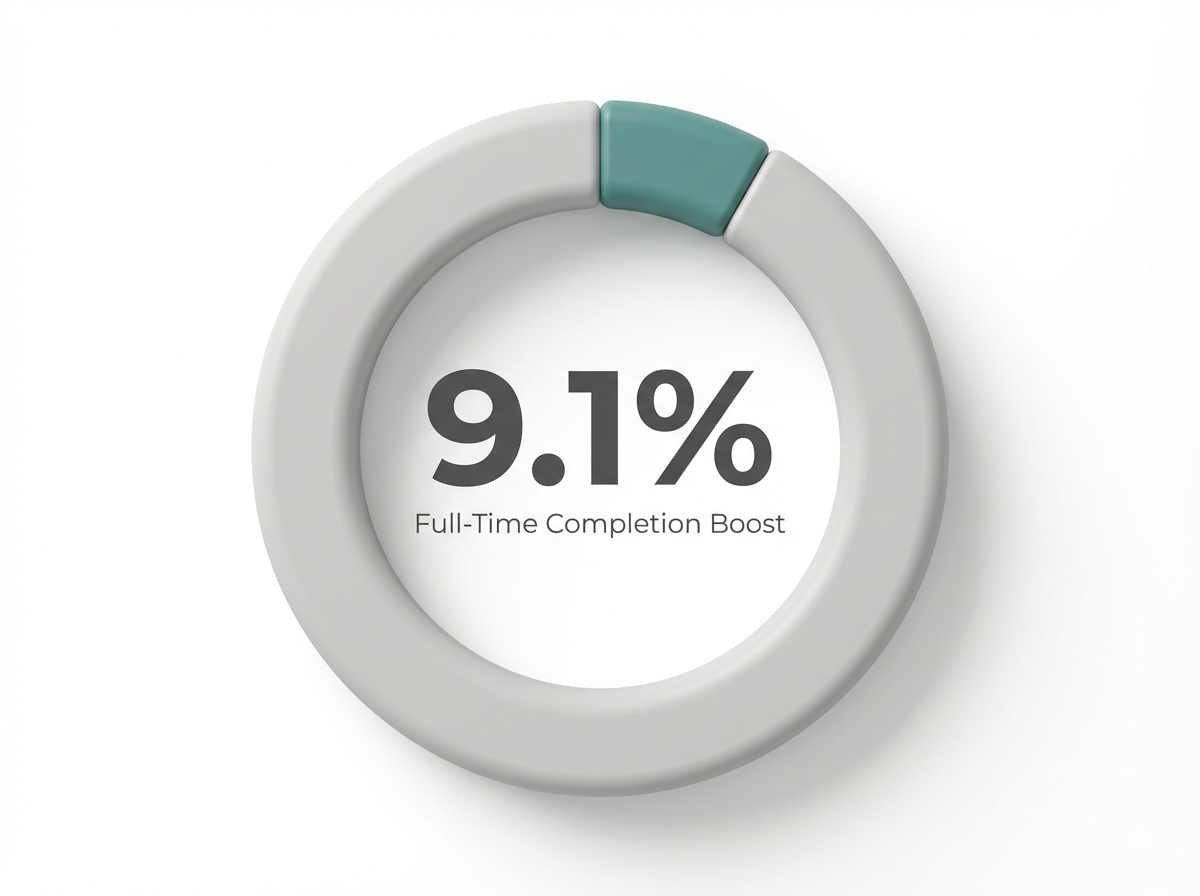
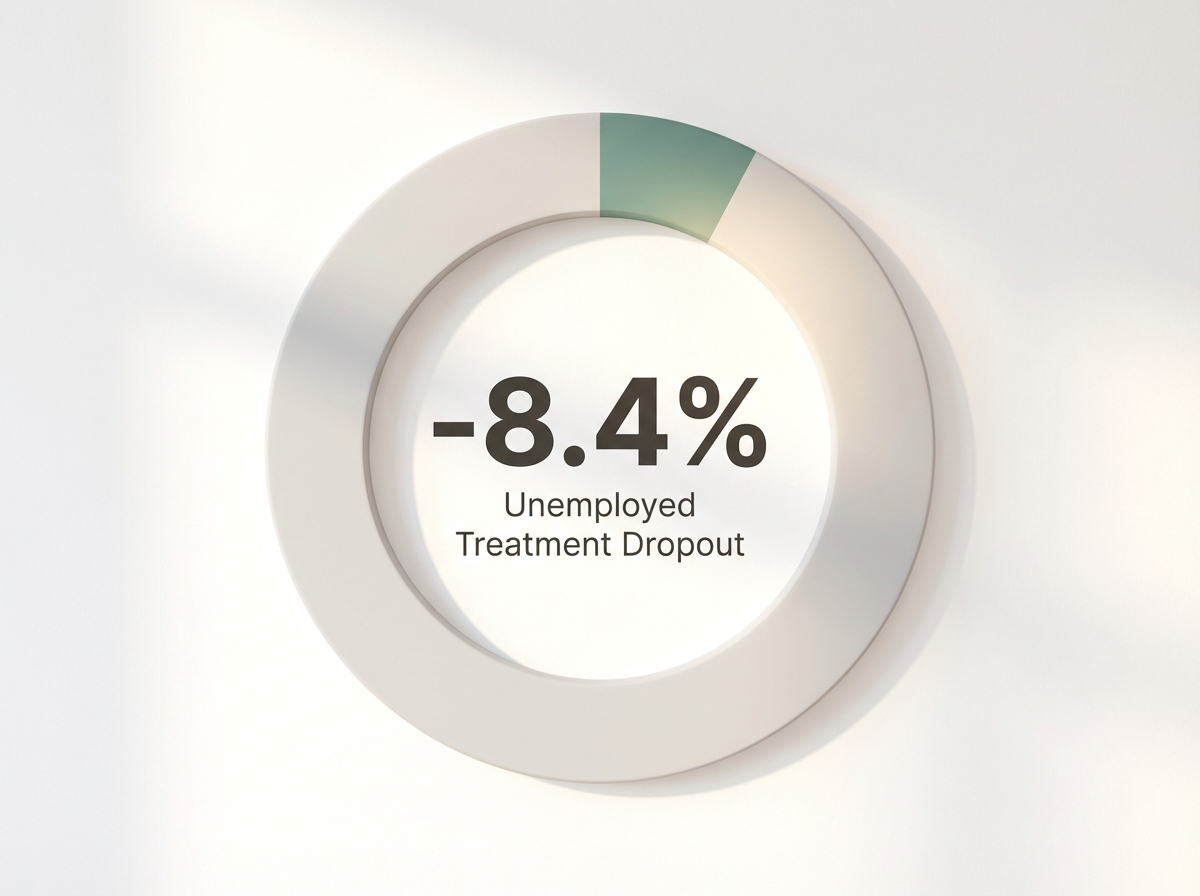
"Research shows that people who remain employed during outpatient treatment are 9.1% more likely to complete their rehab program compared to those who are not working."6
This structure helps organize your time, ensuring you aren't left with idle hours that could lead to negative thinking. By attending evening classes after a workday, you transition from professional focus to personal healing, creating a holistic daily routine.
Employment's Impact on Treatment Success
What you'll learn: This section connects your employment status directly to long-term sobriety statistics.
The data is clear: can you work while in outpatient rehab and succeed? Absolutely. In fact, working increases your odds of success. Individuals who increase their work hours during outpatient rehab are 1.5 times more likely to stay abstinent at follow-up compared to those whose work hours decrease.6
Coastal Recovery Partners supports this by offering Medication-Assisted Treatment (MAT) and therapy that fits around your job. This ensures you maintain the financial stability and self-esteem that employment provides, which are critical buffers against relapse.
Business Application: For Employers & HR
Employers can encourage supportive attendance policies and promote programs like Employee Assistance Programs (EAPs). Supporting an employee's flexible schedule for evening classes often results in higher retention and a more loyal, productive team member post-recovery.
Legal Protections for Working Patients
FMLA and Job-Protected Leave Rights
What you'll learn: You will learn the specific criteria for FMLA to determine if your job is legally protected while you seek treatment.
The Family and Medical Leave Act (FMLA) is a federal safeguard that may allow you to take up to 12 weeks of unpaid, job-protected leave. This can be used for intermittent leave—such as leaving an hour early for therapy—without risking your position. To qualify, you generally must meet these criteria:
- Work for a covered employer (usually 50+ employees).
- Have worked for your employer for at least 12 months.
- Have worked at least 1,250 hours over the past 12 months.
Because FMLA covers substance use disorder treatment, the answer to "can you work while in outpatient rehab" is legally supported. Coastal Recovery Partners can assist with the necessary paperwork to verify your treatment schedule without oversharing clinical details.3,8
ADA Accommodations for Recovery Needs
What you'll learn: You will understand how to request "reasonable accommodations" under the ADA to adjust your schedule for therapy.
The Americans with Disabilities Act (ADA) prohibits discrimination against employees in recovery and requires employers to provide reasonable accommodations. This is crucial for those attending outpatient care. Accommodations might include:
- Modified Schedules: Adjusting start/end times to attend morning or evening classes.
- Leave for Appointments: Using accrued time off for therapy sessions.
- Temporary Role Adjustments: Shifting non-essential duties during the early stages of recovery.
If you are asking, "can you work while in outpatient rehab," the ADA ensures your employer must engage in an interactive process to find a solution that works for both parties, provided it doesn't cause undue hardship.3

Managing Work-Recovery Balance Challenges
Stress Management and Relapse Prevention
What you'll learn: You will acquire a toolkit of stress-reduction techniques to handle the dual pressure of work and recovery.
Balancing a career and recovery requires proactive stress management. High stress is a primary relapse trigger. Coastal Recovery Partners utilizes Cognitive Behavioral Therapy (CBT) to help you build resilience. To manage the daily load, consider these "micro-habits":
The "Transition Ritual" Create a 15-minute buffer between work and your evening class (e.g., a walk, listening to music) to mentally switch gears. Scheduled Decompression Block out 30 minutes daily strictly for non-work, non-therapy relaxation. MAT Support Utilize Medication-Assisted Treatment if recommended; it significantly reduces cravings, making the workday manageable.4
Navigating Workplace Disclosure Decisions
What you'll learn: You will learn a decision framework for deciding if, when, and how to tell your employer about your treatment.
You are not required to disclose your diagnosis unless you are requesting specific accommodations. If you can manage your schedule using Coastal Recovery Partner's evening classes and your own PTO, you may choose to keep your treatment private. However, if you need schedule adjustments, follow this simple script:
"I have a recurring medical appointment that requires me to leave at 4:30 PM on Tuesdays and Thursdays. I have a plan to make up the hours on Saturday mornings. Can we discuss approving this schedule adjustment?"
This approach focuses on the solution rather than the problem, protecting your privacy while securing the flexibility you need.10
Conclusion
Recovery doesn't mean putting your life on hold. With the right support system and flexible treatment options, it's entirely possible to maintain your career while addressing substance use challenges. The key is finding a program like Coastal Recovery Partners that adapts to your schedule rather than forcing you to choose between your livelihood and your health.
The most effective approaches share several common elements: evening and weekend scheduling that accommodates work commitments, outpatient structures that provide clinical support without requiring residential stays, and programs that recognize professional stability as a foundation for lasting recovery. These flexible treatment models allow individuals to attend therapy sessions, participate in group support, and access medical care outside traditional business hours—maintaining both their income and their sense of purpose during a vulnerable time.
Whether you're managing a demanding career, supporting a family, or building your professional future, the right outpatient treatment provides the structure and accountability needed without requiring extended time away from work. Participants gain valuable coping strategies, connect with others facing similar challenges, and develop a sustainable path forward—all while maintaining the stability that employment provides.
Recovery becomes most sustainable when it integrates with life rather than interrupting it. With compassionate, flexible care that respects both professional commitments and personal healing, moving forward doesn't require stepping away—it simply requires taking the first step.
Remember that recovery is a journey of rebuilding trust—in yourself, in others, and in the process of healing. If you are ready to explore your options, reach out to Coastal Recovery today. We're here to help guide you toward a future defined not by your past, but by your resilience and hope.
Recovery Starts With a Conversation
Whether you’re exploring recovery for yourself or seeking guidance for someone you care about, Coastal Recovery Partners is here to help. Our team offers trauma-informed, evidence-based support grounded in structure, compassion, and real connection—without pressure or judgment.
When you’re ready, we’ll meet you where you are and help you take the next step forward.

Frequently Asked Questions
Can I start outpatient treatment immediately without taking time off work?
Yes, you can usually start outpatient rehab right away without taking extended time off work. Outpatient programs are designed for flexibility, offering sessions in the early morning, evenings, or even on weekends to fit most work schedules. This allows you to maintain your job and meet your treatment needs at the same time. Coastal Recovery Partners specializes in working with busy professionals, helping you build a treatment plan that respects both your work and recovery goals. Studies confirm that can you work while in outpatient rehab is not only possible, but staying employed can improve treatment outcomes.7
What happens if my work schedule changes during treatment?
If your work schedule changes during treatment, most outpatient rehab programs—including those at Coastal Recovery Partners—are designed to adapt with you. Flexible scheduling is a core feature, allowing you to shift therapy sessions to new time slots, such as mornings, evenings, or weekends. If you’re worried about maintaining both work and treatment, remember that can you work while in outpatient rehab is possible thanks to these flexible options 7. Communicate any schedule changes to your care team right away so they can help you update your treatment plan and keep your recovery on track.
Does Coastal Recovery Partners offer medication-assisted treatment for working professionals?
Yes, Coastal Recovery Partners offers medication-assisted treatment (MAT) designed specifically for working professionals. MAT combines FDA-approved medications with counseling and behavioral therapies, making it a strong option for those seeking recovery while managing a job. This approach can dramatically reduce relapse rates—studies show that 80% of people with opioid use disorder relapse within two years without MAT, compared to much lower rates with this treatment included. Flexible scheduling and telehealth appointments ensure that you can receive MAT without disrupting your workday. Their team works with you to create a treatment plan that fits your unique professional and recovery needs.4
How do I explain gaps in my work schedule without disclosing my treatment?
If you have gaps in your work schedule due to outpatient treatment but prefer not to disclose your participation, you can simply state you had personal or medical appointments. You are not required to share specific health details unless you are requesting a formal accommodation under the ADA or FMLA. Many people use paid time off, vacation hours, or flexible scheduling to cover these absences. Coastal Recovery Partners can help you create a communication plan that respects your privacy and supports your work commitments. Remember, can you work while in outpatient rehab often means finding ways to manage your schedule confidently and discreetly.3
What if I miss a session because of a work emergency?
Missing a session due to a work emergency is understandable, and outpatient rehab programs like those at Coastal Recovery Partners are built to accommodate life’s unpredictability. If you miss a session, contact your care team as soon as possible to discuss rescheduling or making up the session—many programs offer flexible options, such as telehealth or evening appointments. Keeping communication open helps you stay on track without derailing your progress. Research confirms that maintaining engagement with treatment and work is key to recovery success, showing that can you work while in outpatient rehab is both realistic and supported by thoughtful program design.7
Can family members attend any sessions if I'm doing treatment after work?
Yes, family members are often welcome to attend certain sessions—even if you’re receiving treatment after work. Many outpatient programs, including those at Coastal Recovery Partners, offer evening and weekend family therapy or educational groups so loved ones can participate without conflicting with your job. Involving family can provide extra support and strengthen your recovery network. Research highlights that programs with flexible hours help clients maintain employment and improve overall engagement in treatment. Ask your care team about which sessions are open to family and how to invite them to join. This approach ensures your work schedule and family support can work together.7
How long will I need to balance work and outpatient treatment?
The length of time you’ll need to balance work and outpatient treatment varies for each person. Most programs last from a few weeks to several months, depending on your treatment goals and progress. Some people taper their sessions as they advance, making it easier to adjust their work schedule over time. Research highlights that maintaining employment during this period can actually improve your odds of completing treatment and achieving lasting recovery. Coastal Recovery Partners offers programs with flexible timelines, so your care plan can adapt as your needs and work responsibilities change. Your treatment team will help you find the right balance every step of the way.6
References
- Recruitment and Employment of People in Recovery. https://www.dol.gov/agencies/eta/RRW-hub/Getting-started/Recruitment-employment
- A Guide for Workers with Substance Use Disorder (SUD). https://askearn.org/page/sud-guide-for-workers
- Substance Abuse under the ADA. https://www.usccr.gov/files/pubs/ada/ch4.htm
- Medication Assisted Treatment Program Overview. https://www.asam.org/docs/default-source/education-docs/mat-program-overview
- Medication Assisted Treatment Toolkit for Counselors. https://californiaopioidresponse.org/wp-content/uploads/2020/07/Medication-Assisted-Treatment-Toolkit-for-Counselors.pdf
- Does employment status predict addiction treatment outcome? https://www.recoveryanswers.org/research-post/employment-addiction-treatment-outcome/
- Engagement in Outpatient Substance Abuse Treatment. https://pmc.ncbi.nlm.nih.gov/articles/PMC3796147/
- Workplace Supported Recovery. https://www.cdc.gov/niosh/substance-use/workplace-supported-recovery/index.html
- Using Motivational Interviewing in SUD Treatment. https://library.samhsa.gov/sites/default/files/PEP20-02-02-014.pdf
- The stigma that undermines care. https://www.apa.org/monitor/2019/06/cover-opioids-stigma