
Evening IOP for Maine Locals: Real-Life Recovery Support

What Evening IOP Means for Maine Residents
Defining Intensive Outpatient Programs
Defining an Intensive Outpatient Program (IOP) is best understood by comparing it to a team sport for recovery. In an evening IOP Maine program, individuals gather several times a week to address mental health and substance use challenges collaboratively. Unlike inpatient hospital stays, this model allows participants to sleep in their own beds and maintain their daily routines.
This structure makes treatment significantly more manageable for those who cannot step away from their responsibilities. Key features include:
- Autonomy: Living at home while receiving care.
- Continuity: Maintaining employment or school attendance.
- Support: Regular access to clinical professionals.
Evening programs specifically cater to busy Mainers by operating after standard business hours. Participants engage in group therapy, individual counseling, and family sessions designed to build real-world confidence. Since approximately 50% of people with substance use disorders also manage a mental health condition, these programs frequently provide simultaneous care for both issues.4
Local providers offering these services are committed to making recovery accessible. By removing the barrier of daytime conflicts, they empower residents to take charge of their health without pausing their lives.
"Think of it like a bridge: evening sessions connect the need for help with the reality of busy schedules."
Why Evening Scheduling Changes Recovery
Evening scheduling is a critical factor that often determines whether someone seeks treatment or delays it. For many Mainers balancing jobs, education, or caregiving, daytime appointments are simply impossible. Evening sessions eliminate the need to choose between livelihood and health.
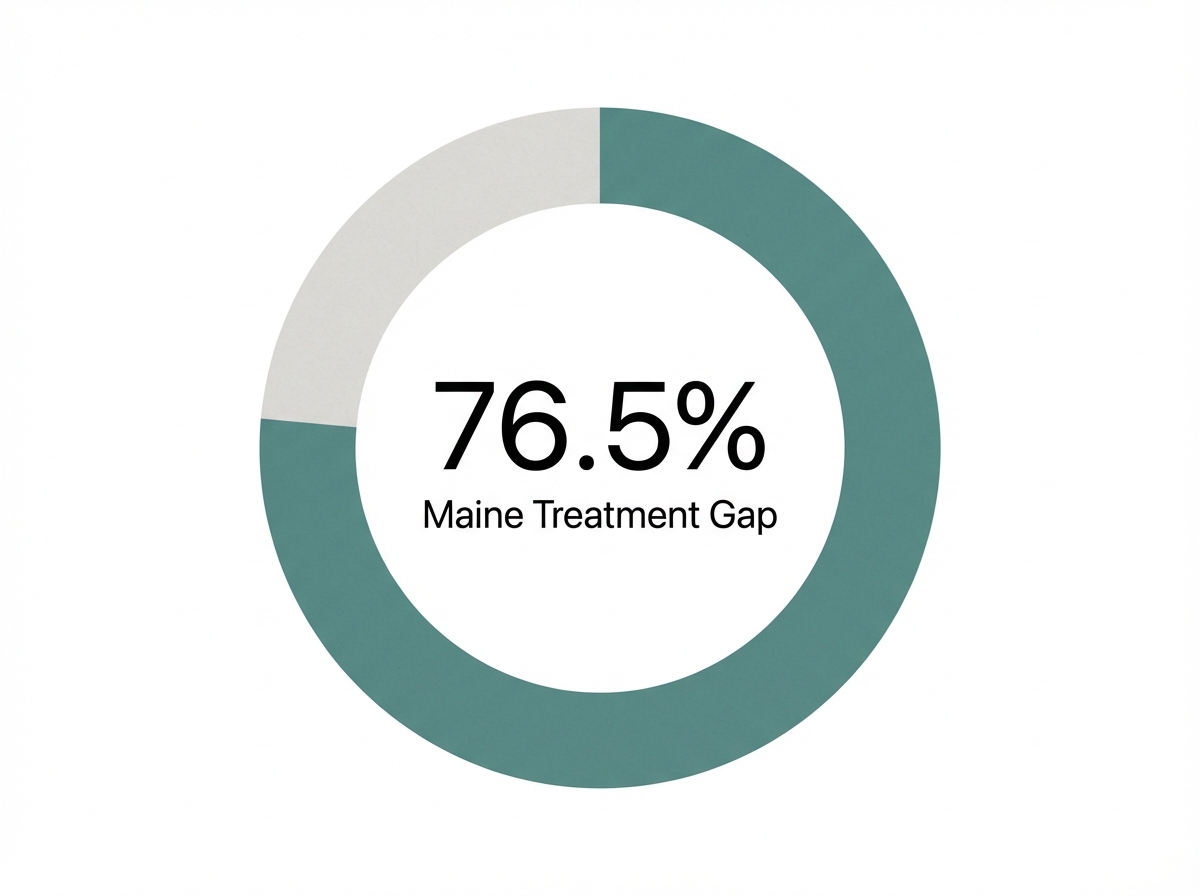
This flexibility directly impacts treatment adherence. In Maine, roughly 76% of individuals requiring substance use treatment do not receive it, often due to logistical barriers. Evening IOP services address this gap by providing a practical entry point into recovery.8
Furthermore, these programs serve as an essential step-down option for those leaving residential care. By meeting people where they are, providers ensure that treatment integrates seamlessly into everyday life, fostering a stronger and more resilient recovery community.
How Evening IOP Treatment Actually Works
Weekly Structure and Time Commitment
An evening IOP Maine program typically follows a consistent rhythm, allowing participants to plan their lives with certainty. Most protocols require attendance three to five evenings per week, with sessions lasting approximately three hours. This routine functions similarly to an advanced night class—a dedicated time and space for growth and learning.
Typical Evening IOP Schedule
This schedule amounts to 9 to 15 hours of clinical engagement weekly. Research indicates that such consistent time commitments significantly improve adherence and reduce relapse risks, particularly for those transitioning from higher levels of care. Providers prioritize flexibility alongside structure; if work or family emergencies arise, staff work with participants to adjust schedules, ensuring progress is not lost.5
Evidence-Based Therapies Used Daily
Participants in evening programs engage in active skill-building rather than passive listening. Therapists utilize proven methodologies to drive change. A cornerstone of this approach is CBT (Cognitive Behavioral Therapy), which equips individuals with tools to manage cravings and restructure negative thought patterns. Studies confirm that CBT is highly effective in reducing substance use and improving overall quality of life.3
In addition to CBT, programs often incorporate:2,4
- Trauma-Informed Care: Creating a safe environment that acknowledges the impact of past experiences on current behaviors.
- Integrated Dual Diagnosis Therapy: Treating addiction and mental health disorders simultaneously.
- Mindfulness & Relapse Prevention: Techniques to maintain stability in high-stress situations.
Local providers tailor these services to align with current research, ensuring that Maine residents receive compassionate, effective care. This comprehensive mix of therapies lays a durable foundation for long-term sobriety.
Core Components That Make Treatment Work
Integrated Dual Diagnosis Care Approach
Integrated dual diagnosis care treats mental health and substance use challenges as interconnected issues. Treating only one aspect is akin to patching a single hole in a leaking boat while ignoring others. With nearly half of individuals with substance use disorders also experiencing conditions like anxiety or depression, a unified treatment strategy is essential.4
Evening IOP Maine providers implement this by utilizing a single clinical team to address both sets of symptoms. This prevents the fragmentation of care and ensures that participants feel fully understood. Therapies are designed to break the cycle where mental health struggles trigger substance use, and vice versa. Evidence suggests this integrated model is the "gold standard," consistently yielding better outcomes than separate treatments.4
Medication-Assisted Treatment Options
Medication-Assisted Treatment (MAT) serves as a critical stabilizer for many in recovery. MAT combines FDA-approved medications—such as buprenorphine, methadone, or naltrexone—with counseling to treat substance use disorders. These medications normalize brain chemistry, blocking the euphoric effects of opioids and alcohol while relieving physiological cravings.1
Evening programs often facilitate MAT management, allowing Mainers to receive medical support outside of work hours. This accessibility is vital for preventing overdose and improving social functioning. By integrating medical support with evening therapy, providers offer a holistic pathway to stability that respects the participant's need to maintain employment.1
Why Evening IOP Matters for Maine's Crisis
Closing Maine's Treatment Access Gap
Maine is currently battling a significant treatment gap. Approximately 219,000 residents who require substance use treatment do not receive it annually. This gap acts as a locked door for those with daytime commitments. With the state's opioid overdose death rate nearly double the national average, accessible solutions are urgent.7,8
Evening IOP Maine programs function as the key to this door. By extending care hours, providers ensure that help is available when people are actually free to receive it. Whether a client needs medication management, therapy, or dual diagnosis support, evening availability removes the logistical hurdles that often prevent treatment initiation.
Building Recovery Capital Over Time
Recovery capital refers to the internal and external resources a person can draw upon to sustain sobriety. This includes supportive relationships, coping mechanisms, employment stability, and a sense of purpose. Evening programs are uniquely positioned to help participants build this capital because they allow individuals to apply new skills in real-time while maintaining their jobs and family roles.
Long-term engagement is a strong predictor of success. Data indicates that while only 43% of people remain substance-free after six months, that figure rises to 85% after three years of sustained recovery efforts. Evening IOPs support this longevity by addressing the whole person—assisting with life goals, housing stability, and family dynamics—transforming recovery from a short-term fix into a lasting lifestyle.6

Getting Started with Evening Recovery
Starting an evening recovery routine is a proactive step toward reclaiming your life. The process is designed to be straightforward and supportive, ensuring you can access the care you need without overwhelming your schedule. Our team is dedicated to guiding you through every phase of enrollment, from the initial conversation to your first group session.
The intake process typically involves three simple steps:
- Confidential Assessment: A private conversation with a clinician to understand your specific needs and history.
- Insurance Verification: Our staff works directly with your provider to clarify coverage and minimize out-of-pocket costs.
- Customized Planning: We collaborate with you to build a treatment schedule that fits your work or school commitments.
You do not have to navigate this journey alone. Whether you are stepping down from residential care or seeking help for the first time, our evening IOP services provide the structure and community necessary for lasting change. If you are ready to explore how evening treatment can fit into your life, we encourage you to reach out. Press Contact Us or call our admissions team today to begin your path to recovery.
Recovery Starts With a Conversation
Whether you’re exploring recovery for yourself or seeking guidance for someone you care about, Coastal Recovery Partners is here to help. Our team offers trauma-informed, evidence-based support grounded in structure, compassion, and real connection—without pressure or judgment.
When you’re ready, we’ll meet you where you are and help you take the next step forward.
Frequently Asked Questions
Will my employer find out if I attend evening IOP?
Your participation in an evening IOP Maine program is private and confidential. By law, treatment providers are not allowed to share your health information, including your attendance, with your employer without your written permission. This is protected under strict privacy rules like HIPAA, which are designed to keep your personal medical details safe. Many local providers understand how important privacy is for working Mainers and make sure all records are securely handled. If you have concerns, staff can explain exactly how your information is protected. Remember, seeking help is your right and can be done without risking your job.9
Can I transition from residential treatment to evening IOP?
Yes, you can often transition from residential treatment to an evening IOP Maine program. This step-down approach is a well-recognized part of the recovery process, letting you move from 24-hour care back to daily life while still receiving structured support. Research shows that continuing care after residential treatment—like joining an evening IOP—lowers relapse rates and helps people build long-term recovery skills. Local providers design their evening IOP Maine services to make this transition smoother, offering flexible scheduling and ongoing therapy in the evenings. Their team will help create a plan that fits your needs and supports your next steps in recovery.5
Does evening IOP work as well as daytime programs?
Yes, evening IOP Maine programs are just as effective as daytime options when they use evidence-based therapies and offer strong support. Research shows that what matters most is the quality of care, not the time of day sessions are held. Evening IOP Maine services provide the same therapies—like group counseling, cognitive behavioral therapy, and medication support—as daytime programs. This flexibility helps more Mainers access treatment without missing work or family time. Local providers design their evening IOPs to meet the needs of working adults and students, making recovery fit into real life while delivering proven results.9
What insurance plans cover evening IOP in Maine?
Most major insurance plans, including MaineCare (Medicaid), many private insurers, and some Medicare plans, cover evening IOP Maine treatment if it's considered medically necessary. Local providers work directly with these insurance companies to help clients figure out what’s included and to guide the approval process. Some plans may require pre-authorization or a referral, so it’s helpful to check with your provider and your insurance carrier. Many evening IOP Maine programs also have staff who can answer insurance questions, help with paperwork, and explore alternative payment options if needed. This support makes starting treatment less stressful and more accessible for Maine families.4
How do you address both addiction and mental health concerns together?
Evening IOP Maine programs use an integrated care approach, which means they treat both addiction and mental health needs at the same time, rather than separately. This is important because about 50% of people with substance use disorders also have a mental health condition, like anxiety or depression. Providers offer therapies that address both issues together, such as group and individual counseling, medication support, and skills for coping with stress. By working with the same team on both challenges, participants get more complete and effective help. Local evening IOP Maine services are designed to make this dual support available when people need it most.4
What happens if I miss an evening session due to work?
Missing an evening IOP Maine session because of work is understandable, and most programs are prepared for this. Providers know that life and jobs sometimes get in the way—even when you’re committed to recovery. If you can’t make it to a session, you should let your treatment team know as soon as possible. They’ll help you reschedule, offer makeup sessions, or provide resources to keep you on track. Staying in touch and staying honest helps keep your recovery moving forward. Flexible options are a key part of evening IOP Maine services, supporting Mainers who need treatment to fit around real-life responsibilities.9
How long does evening IOP typically last before I can step down?
The length of time you’ll spend in an evening IOP Maine program can vary, but most people attend for about 8 to 12 weeks before stepping down to less intensive care. This period gives you enough time to build strong coping skills, develop new routines, and practice healthy habits in real life. Research shows that staying engaged in structured treatment for several months leads to better long-term recovery outcomes. Local providers will check in with you regularly to see how you’re doing and decide together when you’re ready to move to the next level of support. Their services are designed to help you progress at a pace that feels right for you.5
References
- Medication-Assisted Treatment FAQ - Illinois.gov. https://dph.illinois.gov/topics-services/opioids/treatment/mat-faq.html
- Effectiveness of Trauma-Informed Care Implementation in Health Care Systems. https://pmc.ncbi.nlm.nih.gov/articles/PMC10940237/
- Cognitive-Behavioral Therapy for Substance Use Disorders. https://pmc.ncbi.nlm.nih.gov/articles/PMC2897895/
- Dual Diagnosis (Co-Occurring Disorders) - Cleveland Clinic. https://my.clevelandclinic.org/health/diseases/24426-dual-diagnosis
- Impact of Continuing Care on Recovery From Substance Use Disorder. https://pmc.ncbi.nlm.nih.gov/articles/PMC7813220/
- Recovery Capital as Prospective Predictor of Sustained Recovery. https://pmc.ncbi.nlm.nih.gov/articles/PMC2211734/
- Maine Opioid Summary - National Institute on Drug Abuse. https://nida.nih.gov/sites/default/files/21963-maine-opioid-summary.pdf
- MAINE - National Survey on Drug Use and Health (NSDUH) - SAMHSA. https://www.samhsa.gov/data/sites/default/files/reports/rpt56188/2023-nsduh-sae-state-tables_0/2023-nsduh-sae-state-tabs-maine.pdf
- Treatment and Recovery | National Institute on Drug Abuse (NIDA). https://nida.nih.gov/publications/drugs-brains-behavior-science-addiction/treatment-recovery
- Testing a Standard Approach to Match Patients with Addiction to Treatment Based on Their Needs. https://knowledgeconnection.mainehealth.org/cgi/viewcontent.cgi?article=1001&context=reach