
Finding Heroin Rehab Centers: A Step-by-Step Guide

Key Takeaways
- Effective heroin treatment pairs FDA-approved medication with behavioral support, and federal guidance explicitly warns that detox alone is not a comprehensive plan for opioid use disorder.1
- Buprenorphine, methadone, and naltrexone each have different access points, so confirm a program prescribes one on-site or arranges a direct referral.2
- Detox by itself lowers tolerance and raises overdose risk, so medical stabilization should always transition immediately into ongoing medication and counseling.1
- Counseling, group therapy, and case management work alongside medication to build coping skills, and programs missing either component offer incomplete care.6
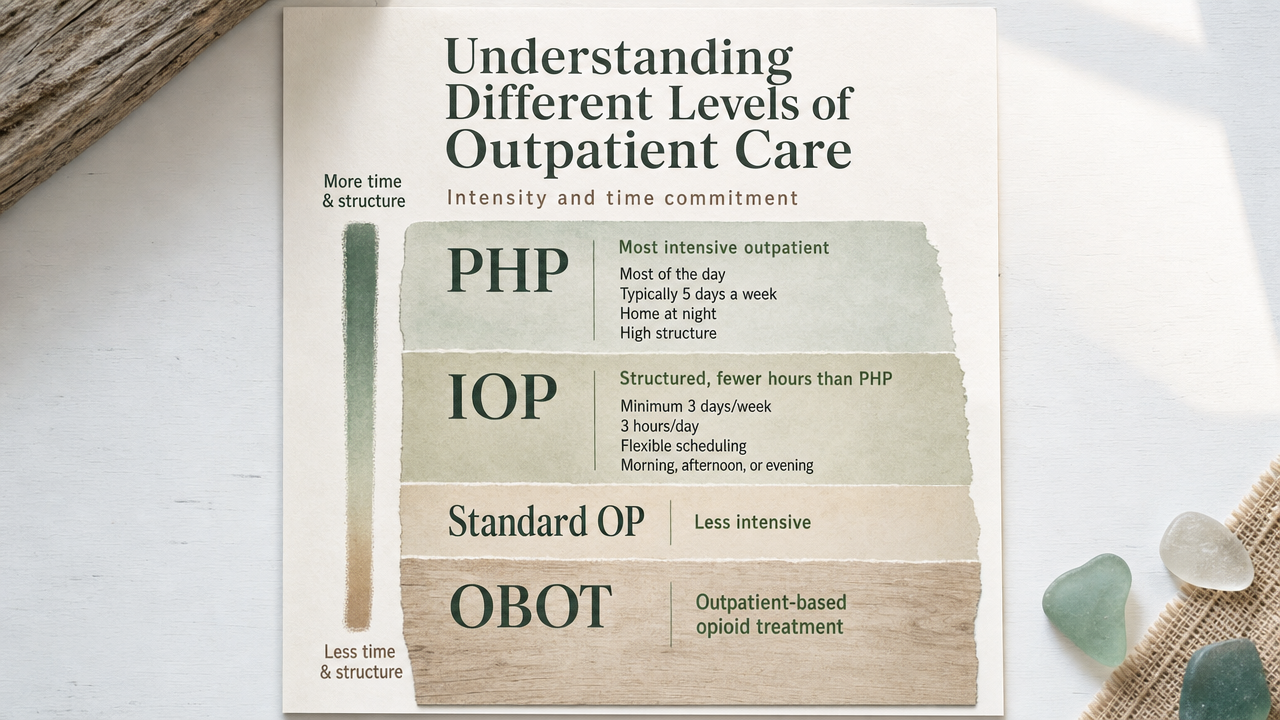
- Match care intensity to your situation across PHP, IOP, standard outpatient, and OBOT, since outpatient outcomes can rival residential for stable clients.5,7
- Use the admissions call to verify medication access, licensing, insurance handling, relapse policy, and schedule fit, and treat high-pressure sales tactics as a red flag.
- In Maine, IOP must run at least three days and three hours weekly, and MaineCare cannot require prior authorization for a class of MOUD or IOP.10,13
- Ask about discharge planning at intake and prepare for the first 30 days with naloxone, a support person, and logistics, since 47% of residential stays lacked follow-up care within 30 days.3,8
Starting Your Journey: Finding the Right Heroin Rehab Center
If you're seeking help for heroin use, you've already taken a significant step. Finding a heroin rehab center isn't just about picking a name from a list; it's about matching the right level of care to your individual needs. Effective treatment for opioid use disorder centers on two key components: medication that addresses the disorder and robust behavioral support.1,6
It's important to understand that successful recovery doesn't always require a 30-day residential stay. Federal clinical guidance emphasizes that detox alone is not a comprehensive treatment plan for opioid use disorder. Instead, FDA-approved medications should be offered as a primary intervention. This shifts the focus from finding a bed to finding a team that can initiate medication, provide consistent counseling, and integrate care into your life.1
This guide will walk you through the process, offering clear, actionable steps.
Evidence-Based Approaches for Heroin Use Disorder
Medication as a Core Treatment
Medication for opioid use disorder (MOUD) is a primary treatment, not a secondary option. Federal clinical guidelines recommend FDA-approved medication as a central component of care, urging clinicians to offer or arrange it as a first step.1,2
Three medications are approved for opioid use disorder, each with different access points:
- Buprenorphine (often combined as Suboxone) can be prescribed by any clinician with a standard DEA registration, including doctors, nurse practitioners, or physician assistants in an outpatient setting.
- Methadone is dispensed exclusively through SAMHSA-certified opioid treatment programs (OTPs).
- Naltrexone (commonly the monthly Vivitrol injection) can be prescribed by any provider. Unlike buprenorphine, which eases cravings, naltrexone works by blocking opioid effects.
Any of these medications can be effective. When evaluating programs, ensure they can prescribe one of these medications or provide a direct referral. If a center does not incorporate medication into their treatment model for heroin use, it's advisable to explore other options.
Why Detoxification Alone is Insufficient
While "getting clean" often implies a short detox period, for heroin use, this approach is insufficient and potentially dangerous. The CDC explicitly states that detoxification alone is not recommended for opioid use disorder.1
After detox, tolerance to opioids decreases rapidly. Without ongoing medication and counseling, the risk of relapse to previous doses, and subsequent overdose, is significantly elevated. Medical stabilization can be a crucial initial step, but it must be integrated into a broader, long-term treatment plan.
Programs that promote detox as the sole treatment or promise a complete recovery in a few days should be approached with caution. A comprehensive program views detox as the beginning of a longer journey, ensuring medication and support are in place immediately afterward.
The Role of Counseling and Recovery Support
Medication addresses the biological aspects of opioid use disorder, reducing cravings and stabilizing physical symptoms. However, heroin use often co-occurs with complex life circumstances. Medication alone does not equip individuals with the skills to navigate daily stressors or triggers.
This is where counseling and recovery support become vital. Peer-reviewed research highlights that evidence-based outpatient care for opioid use disorder combines medication with psychosocial treatments, including counseling, group therapy, and case management. These elements work synergistically, not as alternatives.6
Effective programs integrate trauma-informed therapy, cognitive behavioral therapy (CBT), relapse prevention strategies, and practical coping skills. If a center focuses heavily on medication but is vague about therapy, or vice versa, it offers an incomplete treatment approach. Comprehensive care includes both components.
Matching Care Levels to Your Lifestyle
Understanding Different Levels of Outpatient Care
Rehab encompasses various levels of care, each requiring a different time commitment. Understanding these options can make the decision-making process less daunting.
When Outpatient Treatment is Appropriate
Outpatient care is a highly effective option for many individuals with heroin use disorder. Research on intensive outpatient programs demonstrates strong evidence and outcomes comparable to inpatient or residential care. A study comparing individuals starting MOUD found that those who began treatment in an outpatient setting had the lowest one-year overdose rate within that specific population.5,7
If you have a stable living environment, some social support, and access to a program that can quickly initiate medication, outpatient care can be an excellent first-line treatment. You don't necessarily need to experience failure in outpatient settings to qualify for residential care.
However, outpatient care isn't suitable for everyone. If you are experiencing heavy use, struggle to attend appointments, live in an unsafe or triggering environment, have recently overdosed, or have untreated severe medical or psychiatric conditions, a higher level of care—such as a hospital stay, medical stabilization, or residential program—may be necessary. A thorough assessment should honestly determine the most appropriate level of care, and reputable programs will facilitate referrals to higher levels when needed.
Preparing for Your First Call: A Self-Assessment
Before contacting programs, consider these questions. Your answers are for your benefit:
- How much and how often are you using? When was your last use?
- Do you have a safe place to live now and in the near future?
- Who in your life knows about your situation, and is there someone who can offer support?
- Can you commit to attending a program three days a week for three hours, regardless of the time of day?
- What is your insurance status (private, MaineCare, uninsured)?
- Have you experienced an overdose in the past year? Do you have naloxone available?
- Are there co-occurring mental health concerns (depression, anxiety, trauma) you wish to address alongside substance use treatment?
This self-assessment helps you gather information that admissions counselors will likely ask, transforming a potentially intimidating call into a prepared conversation.
Evaluating Programs: Your Initial Admissions Call
Key Questions to Ask Prospective Programs
While websites offer polished information, a phone call provides a more direct insight into a program's approach. Prepare a list of questions to ask. A reputable admissions team will appreciate your thoroughness.1,2,10,12
- Do you prescribe medication for opioid use disorder on-site, and which ones? Look for buprenorphine, naltrexone, or direct referrals to OTPs for methadone. A program focused solely on counseling is incomplete.
- How quickly can I begin medication after my intake? Aim for same-day or next-day initiation; a delay of weeks is too long.
- What does a typical week in the program entail (days, hours, morning/evening tracks)? If it's an IOP, it should meet at least three days per week for three hours per day.
- How do you integrate mental health treatment with substance use care? Many individuals with heroin use disorder also experience depression, anxiety, or trauma. Integrated care is crucial.
- Are you state-licensed, and under what category? In Maine, outpatient and non-residential IOPs are licensed by the Division of Licensing and Certification.
- Do you accept my insurance or MaineCare, and can you provide a cost estimate today? They should be able to verify benefits promptly.
- What is your policy if I experience a slip or relapse? The appropriate response is a plan adjustment, not immediate discharge.
- How do you assist with coordinating care around life responsibilities like work, family, and transportation? Effective care coordination is essential for sustained engagement.
Document the responses to compare programs effectively.
Warning Signs to Heed During Your Call
Trust your instincts during these calls. Certain responses should prompt you to end the conversation.
Be wary if a program promotes a 5- to 7-day detox as the entire treatment, as this contradicts federal clinical guidance and increases overdose risk upon discharge. Similarly, if they discourage MOUD or characterize buprenorphine as "just trading one drug for another," their approach is not aligned with the standard of care. Avoid programs that promise a cure, guaranteed success rates, or fixed timelines for being "done," as these are unrealistic claims.1,2
Other red flags include:
- Pressure to admit immediately without a thorough assessment
- Vague answers about licensing
- A lack of emphasis on counseling or case management
- No discussion of post-program planning
- An intake person who prevents you from asking questions
High-pressure sales tactics are inappropriate in healthcare settings.
It is perfectly acceptable to politely end the call if a program doesn't feel right. Prioritizing your well-being is paramount in this process.
Recovery Starts With a Conversation
Whether you’re exploring recovery for yourself or seeking guidance for someone you care about, Coastal Recovery Partners is here to help. Our team offers trauma-informed, evidence-based support grounded in structure, compassion, and real connection—without pressure or judgment.
When you’re ready, we’ll meet you where you are and help you take the next step forward.
Maine-Specific Regulations and Protections
Licensing and Program Standards in Maine
Understanding Maine's regulations can empower you during your search. Reputable programs will readily provide clear answers regarding their compliance.
In Maine, non-residential intensive outpatient programs are licensed by the Division of Licensing and Certification under the outpatient services module 12. When inquiring about licensing, expect a clear "yes" and the specific category name.
Maine's outpatient and IOP services have specific structural requirements. IOP must include a scheduled sequence of clinical and educational sessions for a minimum of three days per week and three hours per day per client. If a program claims to be an IOP but does not meet these criteria, it is not compliant with state regulations.10
Office-based opioid treatment (OBOT) in Maine involves MOUD combined with non-pharmacologic care in outpatient medical settings outside of certified OTPs. Clinicians providing OBOT must hold a license, a DEA registration, and adhere to Maine's prescription monitoring requirements. This oversight ensures accountability and patient safety.9,11
Navigating MaineCare, Insurance, and Prior Authorization
Financial concerns are common, and it's important to address them openly.
If you have MaineCare, state law provides a crucial protection: MaineCare cannot require prior authorization for at least one class of MOUD or for intensive outpatient therapy services for OUD. This provision is designed to expedite access to care, so be sure to mention it during your inquiries.13
For private insurance, coverage varies. A competent admissions team should be able to verify your benefits during the initial call and provide an estimate of your out-of-pocket costs in writing before you commit. If you are uninsured, ask about sliding-scale fees, assistance with MaineCare enrollment, and available grant funding. These are legitimate and necessary questions.
The Importance of Discharge Planning from Day One
A critical question often overlooked during initial inquiries is: "What happens after I complete your program?" The answer reveals much about a center's commitment to long-term recovery support.
A 2022 study of Medicaid enrollees in 10 states found that 47% of residential treatment episodes were not followed by an outpatient visit or MOUD within 30 days of discharge. This highlights a significant gap in continuity of care during a period of heightened relapse and overdose risk. While this study focused on specific populations, it underscores the importance of proactive discharge planning.8
Effective discharge planning begins at intake, not on your last day. Before committing to a program, ask specific questions: Who will arrange my follow-up appointments? Will my medication prescription continue without interruption? If I'm transitioning from PHP to IOP to standard outpatient, is this managed within your program or with an external provider? If it's an external provider, will you schedule the appointment for me, or simply provide a contact number?
Listen for the term "warm handoff," which signifies that a person, rather than just a referral, facilitates your transition to the next level of care. This detail can be crucial in maintaining engagement and preventing individuals from disengaging from treatment.
Safety Planning: Essential Steps for the First 30 Days
The initial month of treatment is a vulnerable period. Proactive planning can significantly enhance your chances of success.3
- First, ensure you have naloxone at home. This safe medication can reverse an opioid overdose, including those involving heroin and fentanyl, and is available over-the-counter nationwide. Keep it in an accessible location and instruct a trusted person on its use. This is a preventative measure, not an expectation of failure.
- Inform at least one trusted individual about your treatment. Share your program's contact information and know that you can reach out to them for support. Sharing your journey can alleviate the burden of shame.
- Address practical logistics before starting: arrange transportation to sessions, childcare during group nights, decide what you'll communicate at work, and plan for uninterrupted medication refills. Your program should assist with this care coordination.
Taking the Next Step: Making the Call
You've gathered considerable information. The next step is to make that initial phone call. One call, to one program, for an honest conversation is all that's required today.
Typically, when you call an outpatient admissions line, someone will answer, ask basic questions, and offer an assessment, often within a day or two. This initial meeting is a discussion about your substance use history, previous treatment attempts, work schedule, insurance, and home environment. Based on this, they will recommend a level of care and, if medication is appropriate, begin scheduling it.1,6
For those in the South Portland area, Coastal Recovery Partners offers PHP, IOP, and standard outpatient programs with flexible scheduling options (morning, afternoon, and evening) designed to accommodate work and family commitments. Regardless of where you call, the act of making the call itself is a significant achievement—a step toward a life where care is integrated, not an afterthought.
Frequently Asked Questions
Do I have to go to a 30-day residential program to treat heroin use?
No. For many individuals, outpatient care that includes medication and counseling is a valid and effective first-line treatment. Research indicates that outcomes for intensive outpatient programs can be comparable to residential care. The most important factor is whether the program provides FDA-approved medication for opioid use disorder alongside robust behavioral support.1,5
What medications should a legitimate heroin rehab center offer?
A reputable center should offer access to at least one of the three FDA-approved medications: buprenorphine, methadone, or naltrexone. Buprenorphine and naltrexone can be prescribed in most outpatient settings, while methadone is exclusively dispensed through SAMHSA-certified opioid treatment programs. If a center dismisses medication or only offers counseling, it provides an incomplete treatment that is not aligned with current clinical guidelines.1,2
Will MaineCare or my insurance cover treatment, and can they require prior authorization?
MaineCare is prohibited from requiring prior authorization for at least one class of medication for opioid use disorder or for intensive outpatient therapy services for OUD. This protection is designed to facilitate quicker access to treatment. Private insurance coverage varies, so it's essential to ask the admissions team to verify your benefits during your initial call and provide a written estimate of your out-of-pocket costs before you commit.13
How can I keep working and caring for my family while in treatment?
Outpatient care models are specifically designed to accommodate these responsibilities. Intensive outpatient programs in Maine typically require a minimum of three days per week and three hours per day, with many offering morning, afternoon, or evening tracks to fit around work or childcare schedules. Office-based buprenorphine treatment often requires even less time commitment. Inquire about scheduling flexibility during your first call.10,11
What questions should I ask on the first call to an admissions line?
Key questions include: Do you prescribe medication for opioid use disorder, and which ones? How quickly can I start medication? What is the typical weekly schedule? Are you state-licensed? Do you accept my insurance or MaineCare? How do you address co-occurring mental health issues alongside substance use? What is your policy if I experience a slip? How do you plan for discharge and ongoing support?2,6,12
How do I help a loved one who uses heroin get into a program?
Keep naloxone readily available at home, as it can reverse an opioid overdose, including those involving heroin and fentanyl, and is available over-the-counter. Offer to be present during their first admissions call, allowing them to speak for themselves. Focus on programs that can quickly initiate medication and provide integrated treatment for co-occurring mental health conditions. Consistent, supportive engagement is more effective than pressure.1,6
References
- Opioid Use Disorder: Treating | Overdose Prevention. https://www.cdc.gov/overdose-prevention/hcp/clinical-care/opioid-use-disorder-treating.html
- Guideline Recommendations and Guiding Principles. https://www.cdc.gov/overdose-prevention/hcp/clinical-guidance/recommendations-and-principles.html
- Lifesaving Naloxone | Stop Overdose. https://www.cdc.gov/stop-overdose/caring/naloxone.html
- Heroin | National Institute on Drug Abuse. https://nida.nih.gov/research-topics/heroin
- Substance Abuse Intensive Outpatient Programs. https://pmc.ncbi.nlm.nih.gov/articles/PMC4152944/
- Outpatient care for opioid use disorder among the commercially insured. https://pmc.ncbi.nlm.nih.gov/articles/PMC7687676/
- Medication for Opioid Use Disorder in the Inpatient vs Outpatient Setting. https://www.jamanetwork.com/journals/jamanetworkopen/fullarticle/2774168
- Outpatient follow-up and use of medications for opioid use disorder after residential treatment among Medicaid enrollees in 10 states. https://pubmed.ncbi.nlm.nih.gov/36332591/
- Chapter 12 Office Based Treatment of Opioid Use Disorder. https://www.maine.gov/md/sites/maine.gov.md/files/inline-files/Chapter%2012%20Office%20Based%20Treatment%20of%20Opioid%20Use%20Disorder.pdf
- 10-144 C.M.R. ch. 123, § 23 - SUBSTANCE USE DISORDER OUTPATIENT SERVICES. https://www.law.cornell.edu/regulations/maine/10-144-C-M-R-ch-123-SS-23
- C.M.R. 02, 380, ch. 12 - JOINT RULE REGARDING OFFICE BASED TREATMENT OF OPIOID USE DISORDER. https://www.law.cornell.edu/regulations/maine/department-02/division-380/chapter-12
- Behavioral Health - Division of Licensing and Certification. https://www.maine.gov/dhhs/dlc/licensing-certification/behavioral-health
- Title 22, §3174-EEE: Prior authorization of treatment for opioid use disorder. https://legislature.maine.gov/statutes/22/title22sec3174-EEE.html